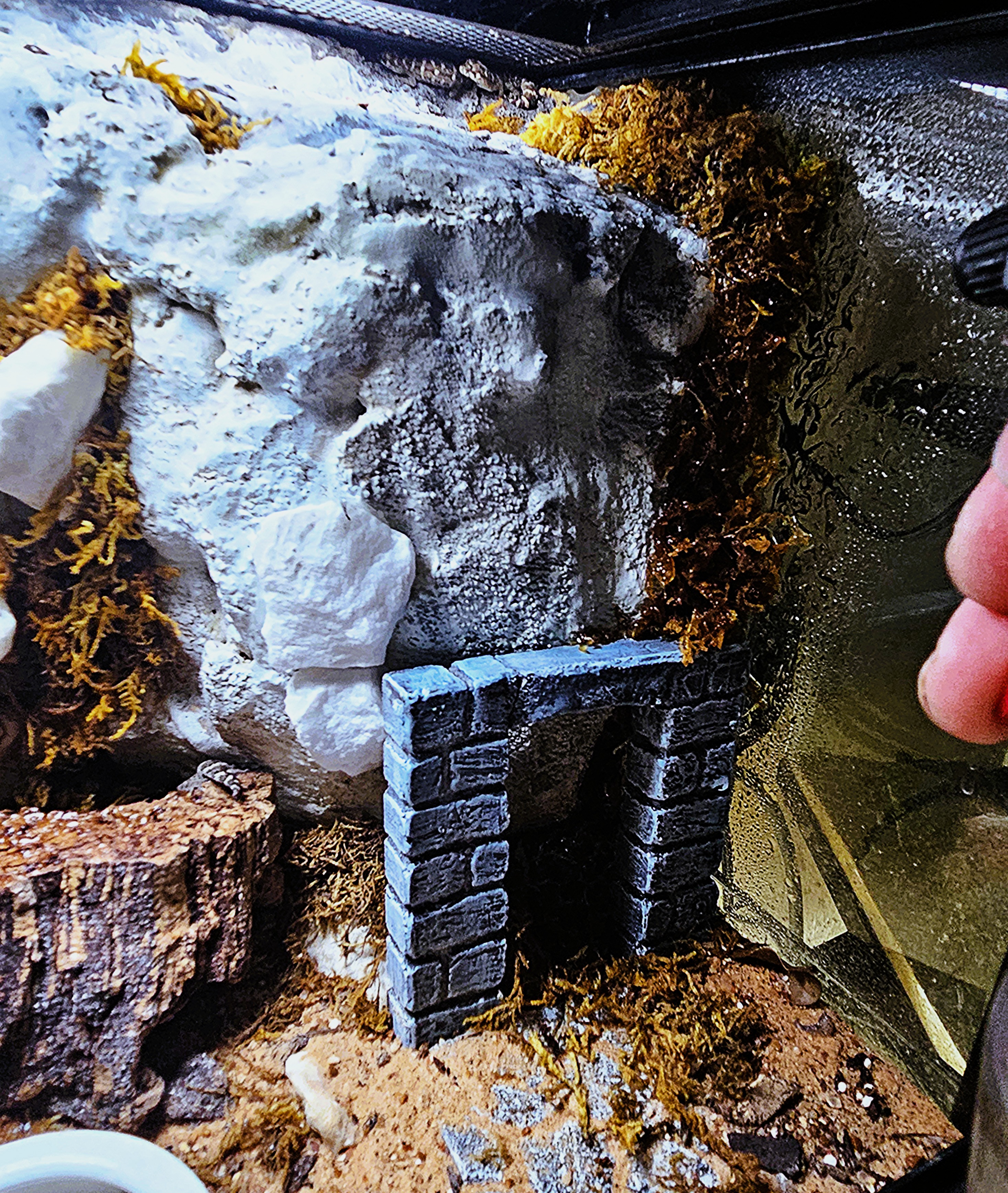
Gather everything below before your gecko arrives. Tap each card to check it off as you go.
Tap a card to mark it as gathered
The Viper Gecko (Hemidactylus imbricatus) is a compact, strikingly patterned gecko native to the arid and semi-arid scrublands of Pakistan and northwestern India. In the wild they occupy rocky outcrops, dry riverbeds, and loose-stone hillsides — squeezing into tight crevices beneath boulders and bark during the day.
They are strictly nocturnal, emerging after dark to hunt small insects across the rock face. During daylight hours they rest deep in rocky fissures and bark hides, where residual ground humidity keeps humidity just above ambient levels. This behavior is the blueprint for their captive enclosure.
Viper Geckos are highly communal and do well in small same-sex or mixed groups when space and hides are sufficient. Males can be territorial with one another, so groups of one male with multiple females — or all-female groups — work best. Their bold banded patterning and curious, animated foraging make them one of the most engaging micro-geckos in the hobby.
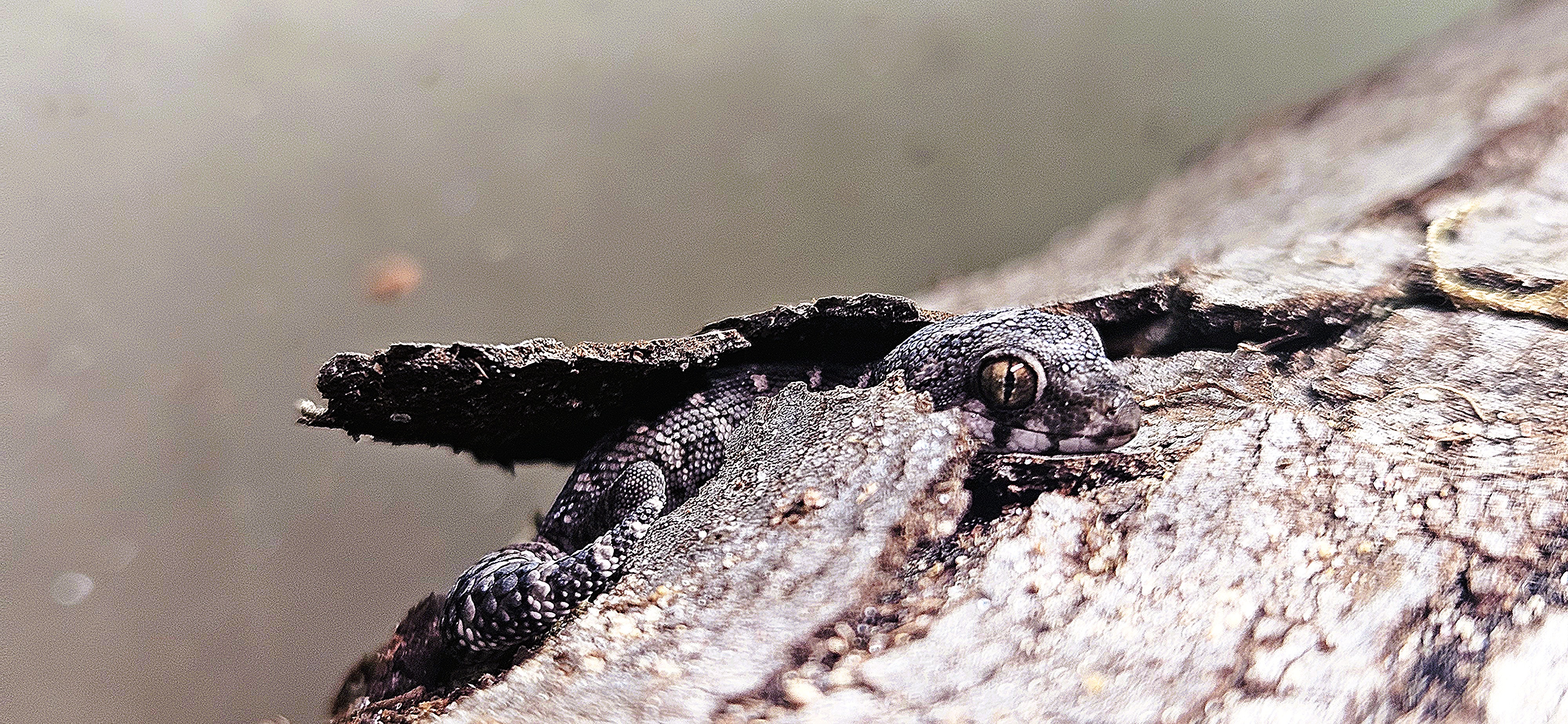
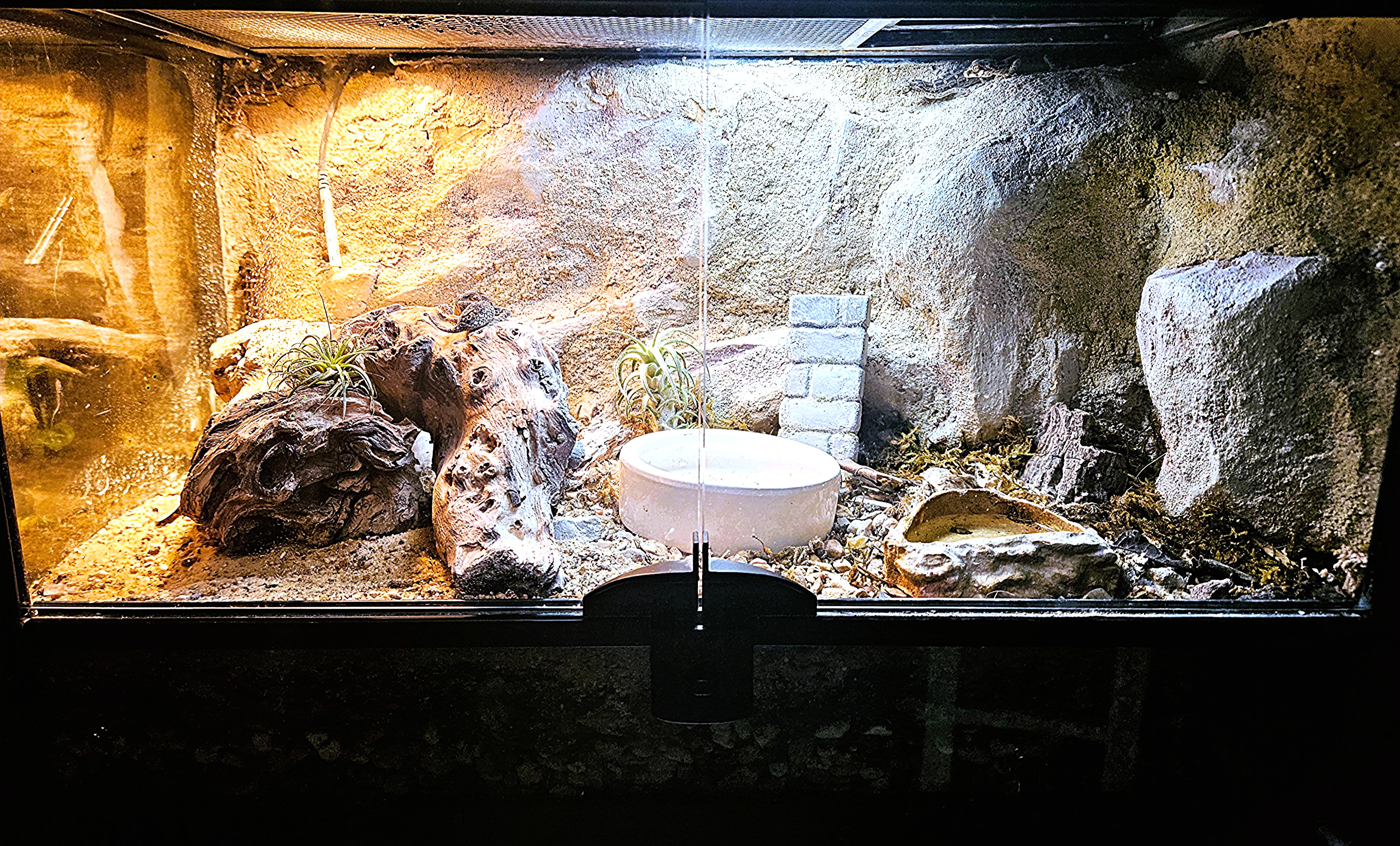
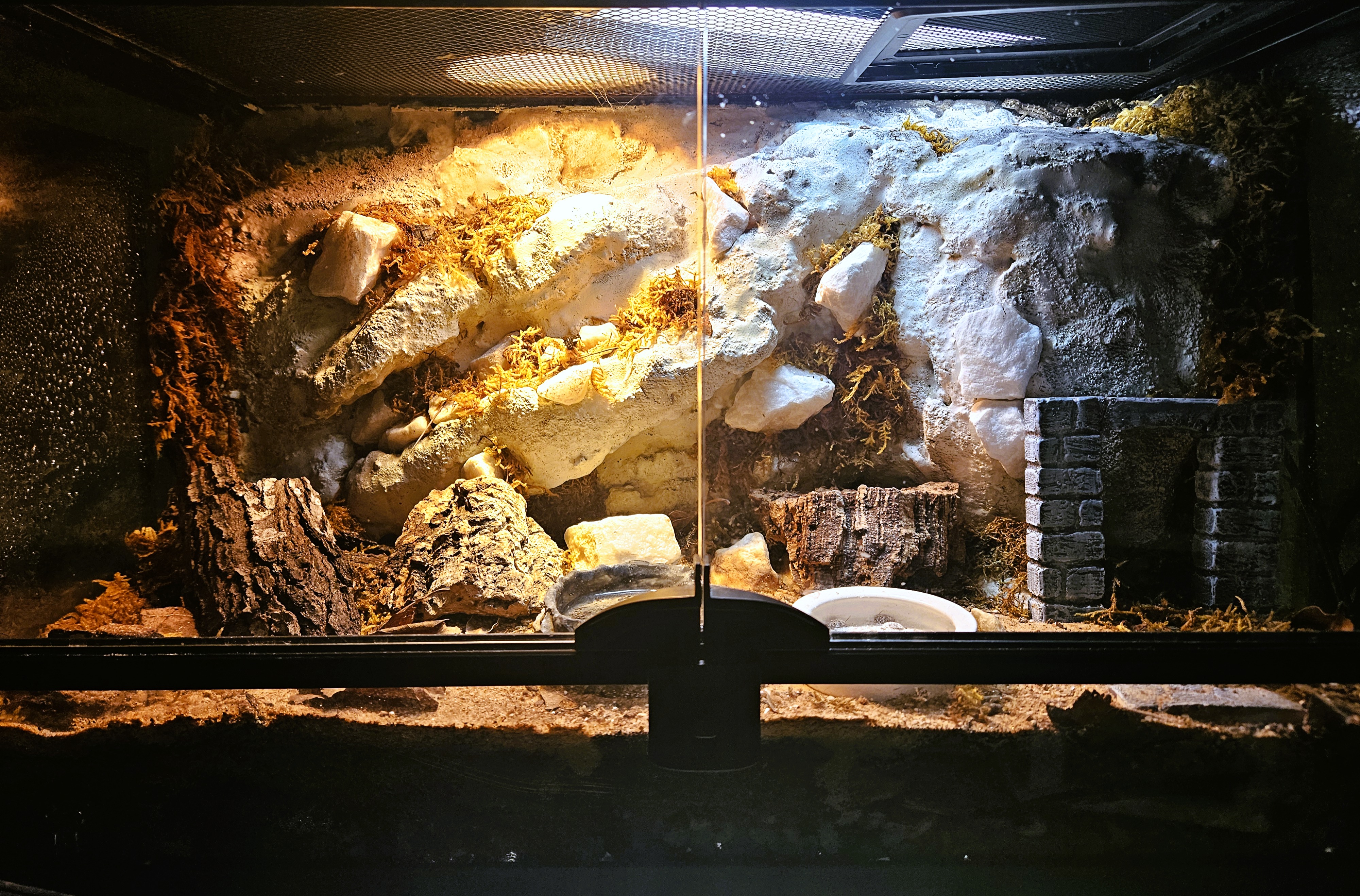
Viper Geckos are rock-crevice specialists. Dense, tight hides along a vertical cork background are essential — open space makes them feel exposed and stressed.
Juvenile Group (2–3)
Adult Group (2–4)
Cork bark vertical background with nook hides & moss
Exposed mixed substrate with moss along the back panel
Though nocturnal, Viper Geckos benefit from low-level UVB exposure. They absorb incidental UV through crevice openings in the wild — provide it without intensity.
5-7% UVB replicates the natural indirect light Vipers experience while day-lounging in nature.
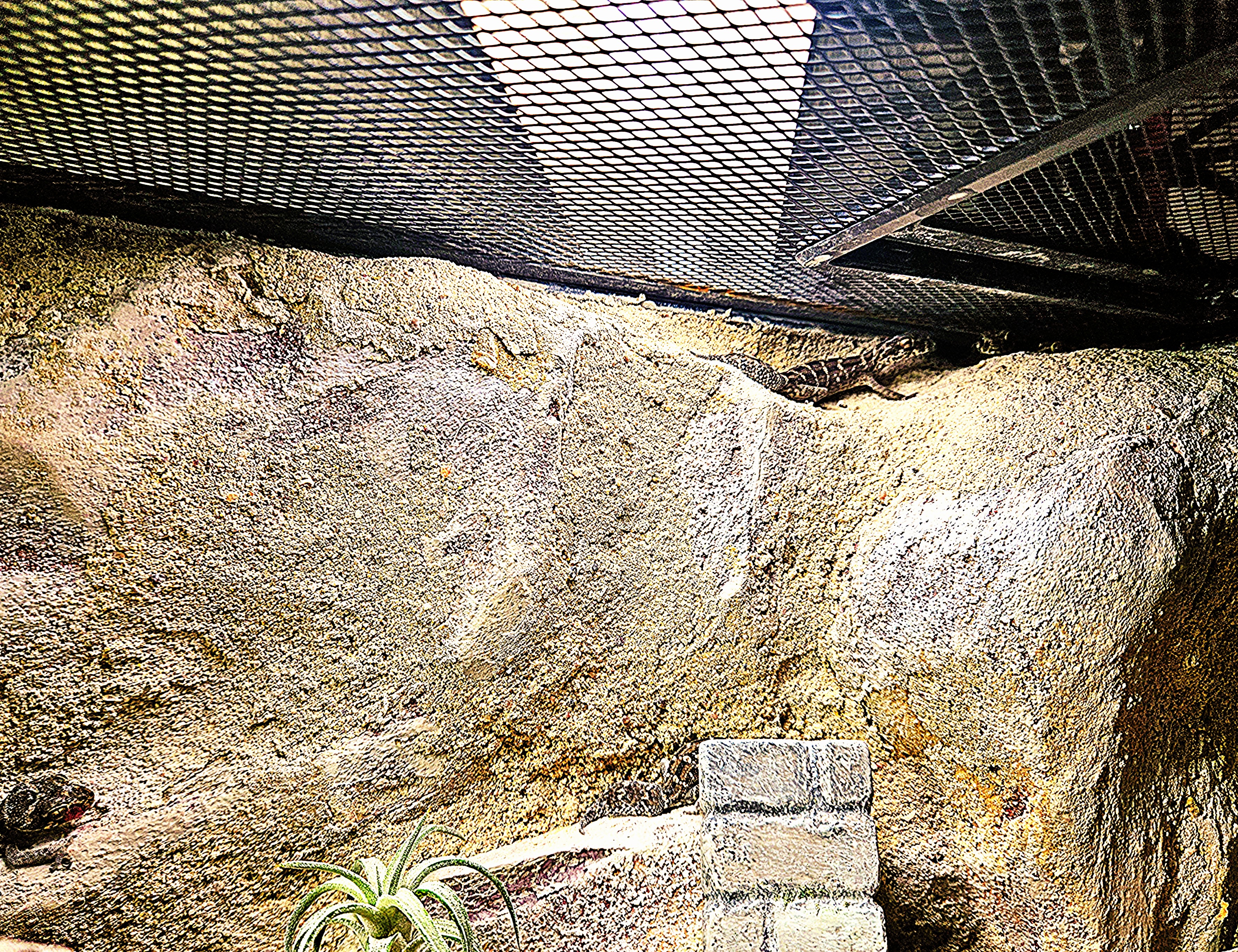
Viper Geckos rely on thermoregulation. Maintain a clear hot-to-cool gradient along the the background.
The hot spot (90–95°F) sits at the top of the cork background, directly under the heat lamp. Geckos will climb up to digest and thermoregulate, then descend to cooler zones to rest. The cool side of the tank floor should not exceed 75°F.
At night, allow temperatures to fall to room temperature — 68–72°F is ideal. Viper Geckos are naturally adapted to significant day/night temperature swings in their native Pakistan. This drop triggers natural activity, feeding, and breeding behavior. Never heat overnight.
Wide gradient against the vertical background provides plenty of options for thermoregulation.
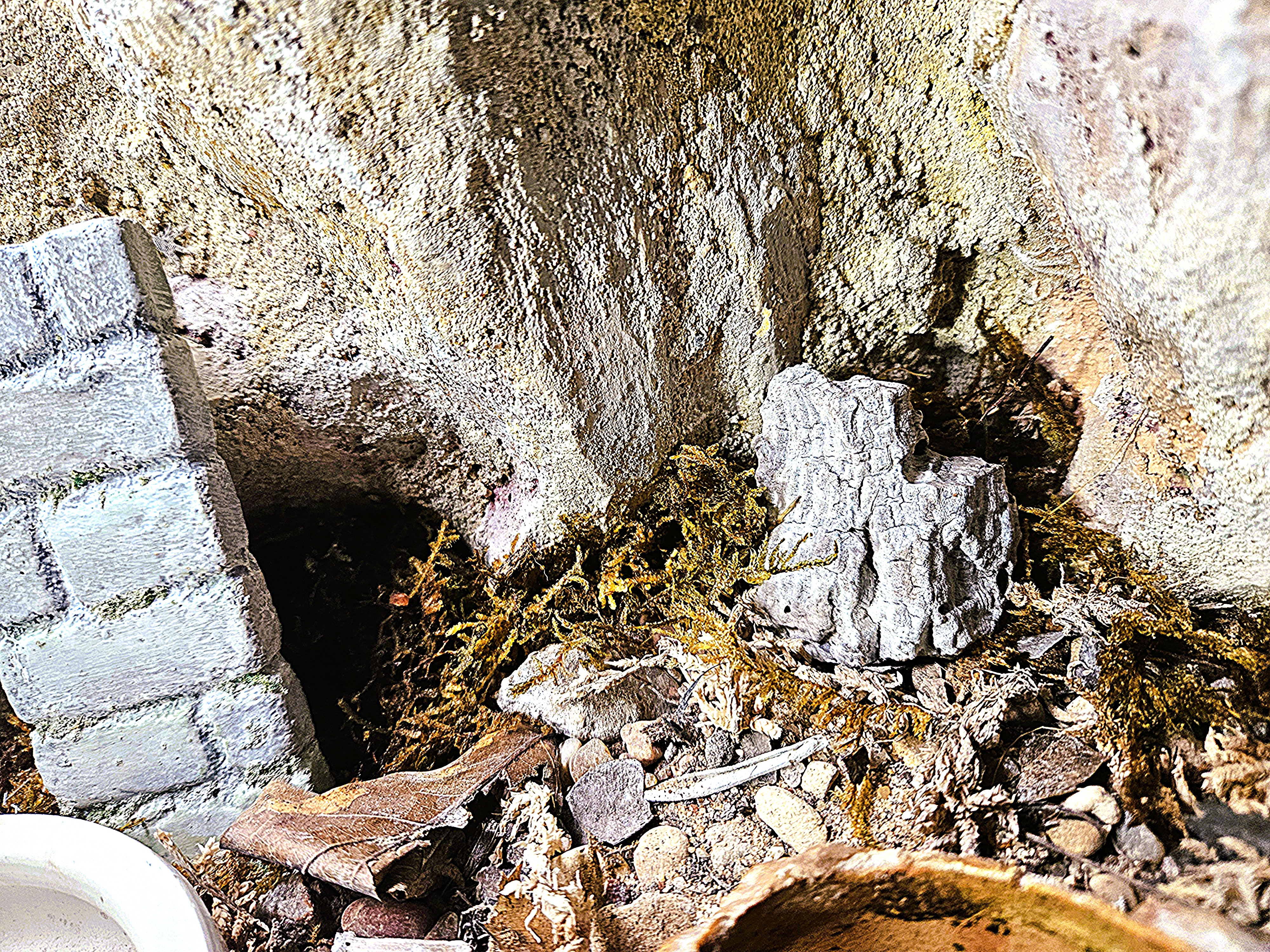
Maintain a dry, well-ventilated main chamber with localized humidity inside hides, mimicking the damp pockets of deep rocky crevices.
Moss-backed hides retain localized moisture — dry sandy substrate with pockets of humidity.
Viper Geckos are enthusiastic, active hunters. Feed after lights out when they are naturally alert and ready to chase prey.
Viper Geckos are hardy when husbandry is dialled in. Most issues trace back to humidity imbalance, inadequate hides, or incorrect temps — fix the environment before assuming illness.
Stuck shed around toes or tail tip is the most common issue. Chronic low humidity during shed cycle is the culprit. Toes with stuck shed can lose circulation quickly.
Increase background misting frequency; add a humid moss hide.Newly acquired geckos may not eat for 1–2 weeks. Stress from transport, an exposed tank, or incorrect temperatures are the most common causes. Breeding season can also suppress appetite.
Reduce disturbance, confirm hot-spot temp, offer different feeder variety.Viper Geckos will drop their tail when stressed or handled roughly. The tail regrows but with a different texture and pattern. Keep the wound site clean and dry to prevent infection.
Keep substrate dry and clean; isolate briefly if tankmates are curious.Males can fight when housed together. Females may squabble over hide spots. Colonies will fight if food is scarce.
Add more nooks, increase the size of the tank, add more basking areas, increase food supply.Soft limbs, bowed legs, tremors, or difficulty climbing are red flags. Caused by chronic calcium deficiency or inadequate UVB exposure. Progresses quickly in small species.
Verify UVB output (replace bulbs every 6–12 months); dust feeders consistently.Wheezing, open-mouth breathing, or mucus around the nostrils indicates a respiratory infection. Usually caused by ambient humidity staying too high for too long without proper drying periods.
Veterinary care required. In the meantime improve ventilation and reduce ambient RH.Gravid females need a deep, slightly moist laying site (soil/moss mix). A female that appears bloated, is straining without producing eggs, or becomes lethargic near her expected laying date may be egg-bound — a genuine emergency in small species.
Provide a deep moist egg-laying area and consult a reptile vet immediately.Viper Geckos carry slight body bulk through the trunk when well-fed. Sunken flanks, visible hip bones, or a thinning tail base paired with lethargy may indicate parasites, inadequate temps, or internal illness.
Fecal float test with a reptile vet; review feeding frequency and feeder nutrition.